

We’re drowning in data in today’s music industry. I gave a lecture this week at Berklee where I argued that a modern record label is - among other things - a data org.
And that’s for good reason. Numbers can’t tell you the whole story…but they do reveal the plot points.
Here are a few that explain where music is right now.
Before we get into the numbers, my book is almost out! You can preorder a signed copy here:
5.1 Trillion
That’s how many on-demand streams the world saw in 2025, according to Luminate. We should be pinching ourselves. This is a far, far cry from 2005, when on-demand streaming first launched and was slow to catch on. It's still unbelievable to me that we went from “streaming as a niche behavior” to “something that happens over 5 trillion times” in essentially one decade.
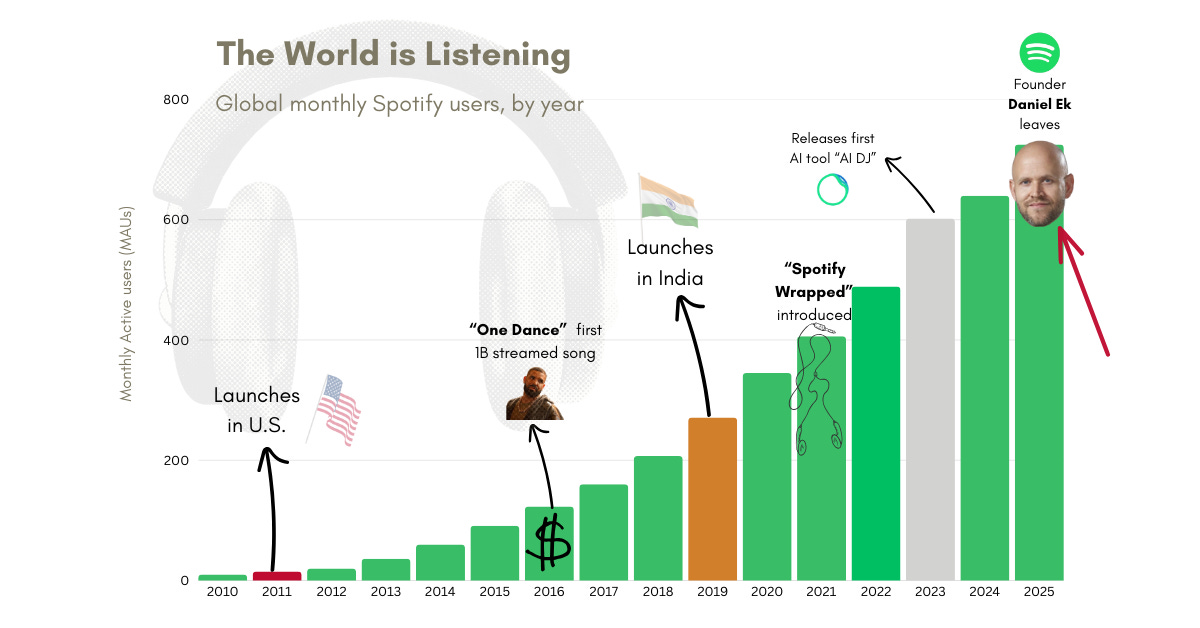
Streaming growth has been steady - but at first, it was slow. Graph by the author.
253 Million
Individual ISRC codes on DSPs at the end of 2025, again from Luminate’s annual report. While there are undoubtedly some duplicates to account for mistakes, and different rights holders of the same track in different territories, we can count on the fact that there are now at least 245M or so songs in the history of recorded music.
88%
Of those 253M available tracks on DSPs were streamed fewer than 1,000 times in 2025. That means Spotify’s master royalty pool is only going to 12% of available songs. And despite the oft-mentioned “songs under 1000 annual streams don’t get paid on Spotify,” that is not true. They still earn publishing.
28 Million
Rough number of ISRCs (and by proxy, songs) on DSPs in 2015. As I said - I’m bad at math - but that’s an increase in the number of songs humans have recorded by a factor of (almost) 10 - in ten years.
39%
Of all DSP uploads are fully Gen AI, meaning they were created with a simple prompt with a Gen AI platform (mostly Suno, but also Udio, ElevenLabs, MiniMax, Beautiful AI, and a few others). This is according to Deezer as of Jan 2026, up from 28% last fall. And this percentage is only increasing as these Gen AI tools are becoming more widely used.
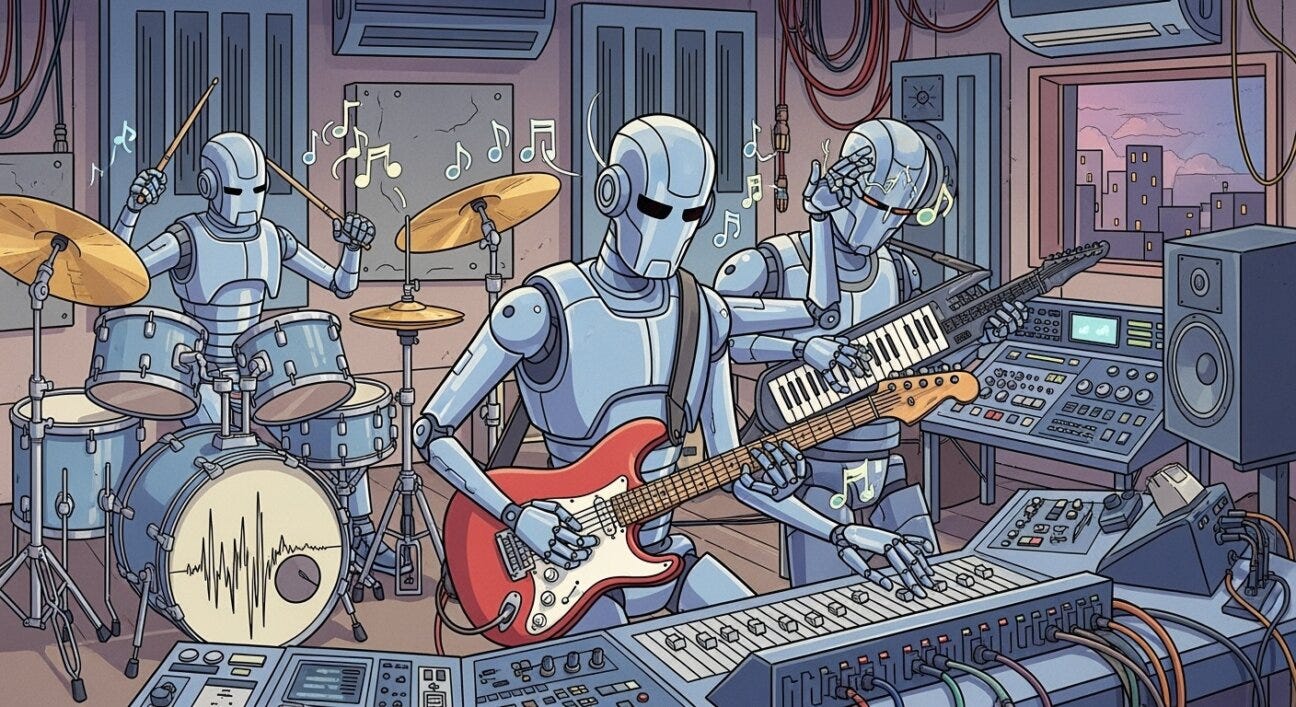
This is what it looks like under the hood of a Gen AI music model, according to Shutterstock AI (and courtesy of Music Business Worldwide).
70% - 80%
Of these fully Gen AI uploads are used in suspected fraudulent streaming practices.
Less than 3%
These fully Gen AI uploads are accounted for in the royalty pool, according to Deezer and Spotify. AI slop, human slop - fans don’t want any of it.
$2 billion
Amount DistroKid is rumored to be asking in a sale, led by Raine Group & Goldman Sachs. They claim to release 30% - 40% of the world’s music and serve more than 2M artists.
DistroKid is by far the biggest long tail distribution company in music. Still, I’m not sure what you’d be buying? They don’t own any rights, they have razor-thin margins, and there is no deep tech there. Sure, the data trove would be very valuable, but $2B?
$1.34 billion
Amount available to independent artists + labels from (what I’m calling) the “Big Four” of indie-focused financing companies: Duetti, beatBread, Pipeline, and Stem.
That’s a lot of capital available to this sector that wasn’t available before. More upside for these artists and labels? These options allow artists and rights holders to keep their rights.
13% + 10%
Year-over-year growth for Sony Music’s recorded music + publishing divisions, and Warner Music Group’s, respectively, according to their earnings call.
So why do they keep laying off people? No, really, why?
1
Great new book about music & AI! Get your copy today.